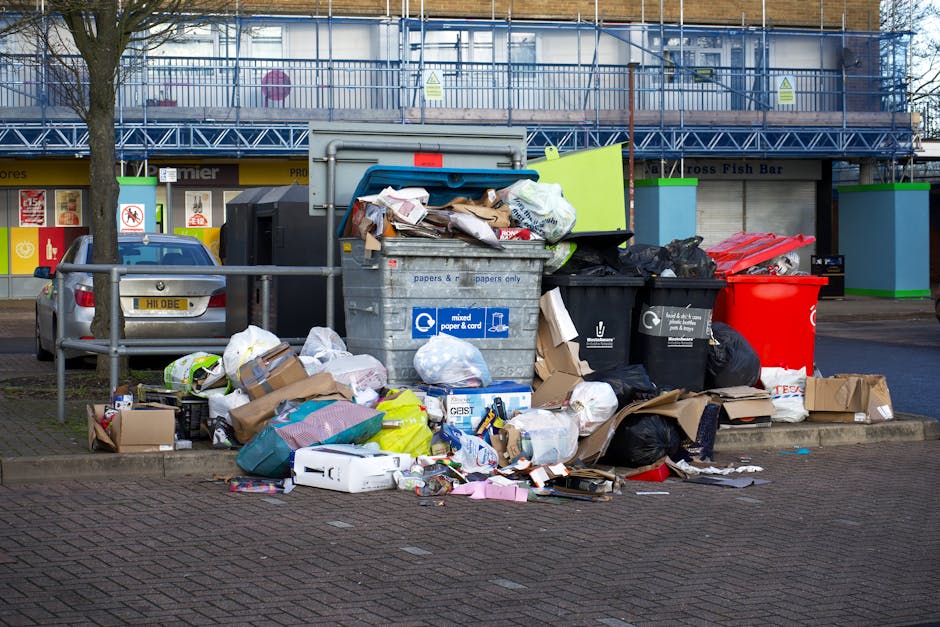
Avoid Hidden Fees on London Bulky Waste Collections
If you have ever booked a bulky waste pickup and then watched the final bill creep up, you are not alone. The job starts simply enough: a sofa, a mattress, maybe a broken wardrobe or a stack of old flat-pack wood. Then the awkward extras appear - access charges, stair fees, same-day surcharges, disposal add-ons, or a mysterious "minimum load" penalty. That is exactly why learning how to avoid hidden fees on London bulky waste collections matters so much.
In London, space is tight, access can be tricky, and every collection has its own quirks. A clear quote should account for the actual work involved, not surprise you halfway through. This guide breaks down what hidden fees look like, how reputable services usually price a bulky waste collection, and what you can do before booking to stay in control. A little preparation goes a long way. Honestly, it saves a fair bit of stress too.
Table of Contents
- Why Avoid Hidden Fees on London Bulky Waste Collections Matters
- How Avoid Hidden Fees on London Bulky Waste Collections Works
- Key Benefits and Practical Advantages
- Who This Is For and When It Makes Sense
- Step-by-Step Guidance
- Expert Tips for Better Results
- Common Mistakes to Avoid
- Tools, Resources and Recommendations
- Law, Compliance, Standards, or Best Practice
- Options, Methods, or Comparison Table
- Case Study or Real-World Example
- Practical Checklist
- Conclusion
- Frequently Asked Questions
Why Avoid Hidden Fees on London Bulky Waste Collections Matters
Bulky waste collection should solve a problem, not create a new one. Yet hidden charges can turn a tidy clear-out into an expensive inconvenience. The issue is not just the money itself. It is the loss of trust, the delay to your schedule, and the awkward feeling of being boxed into paying more because the items are already there and the team is waiting outside.
London makes this more common than people expect. Parking restrictions, narrow stairwells, basement flats, lift issues, traffic delays, and restricted loading times all affect the job. A provider that is not transparent may use those realities as a reason to add extras later. A good provider, by contrast, will ask the right questions upfront and explain how the quote is built.
That is why a sensible customer does not just compare the headline price. You compare what the price includes. Does it cover labour? Does it include loading from inside the property? Is congestion, parking, or disposal built in? Are there charges for awkward access, extra labour, or oversized items? If those things are unclear at the start, they tend to become very clear at the end. Usually in the least enjoyable way.
If you are looking for a broader service that covers a range of removal needs, it can help to review a provider's main waste removal service alongside its pricing approach. And if you want to understand how quotes should be handled before you book, the dedicated pricing and quotes page is the right place to start.
How Avoid Hidden Fees on London Bulky Waste Collections Works
The simplest way to avoid hidden fees is to treat the collection like a mini project. Not a big one, just enough of a process to make the quote accurate. In practice, that means describing the items, their condition, where they are located, and how easy or difficult they are to remove. A quote is only as good as the information behind it.
Most reputable bulky waste collections will ask about:
- the type of items, such as furniture, white goods, mattresses, or mixed household waste
- approximate quantity or volume
- access conditions, including stairs, lifts, parking, and distance from vehicle to property
- any dismantling needed
- whether items are inside the property or already outside
- your preferred collection date and timing
That is the operational side. The pricing side is where confusion usually creeps in. Some companies quote by load size, others by item, and some by a combination of labour and disposal weight. A fair model is not always the cheapest looking one, but it should be clear. If a collection is quoted on volume, then the supplier should explain what happens if the load is slightly larger than expected. If it is item-based, they should be precise about what counts as one item.
For example, a broken three-seater sofa taken from a ground-floor hallway is a very different job from the same sofa carried down four flights of stairs in a flat without a lift. One is quick. The other takes time, planning, and a bit of muscle. If a quote ignores that, the fee may not be hidden for long.
It also helps to understand the wider job category you are booking. A collection for old sofas or tables may be better matched to a dedicated furniture clearance service, while a house packed with mixed items might be better suited to house clearance or home clearance. Matching the service to the actual job reduces the chance of add-on charges later.
Key Benefits and Practical Advantages
Keeping the pricing clear is not just about saving money. There are some very practical upsides.
- Better budgeting: You know the likely total before anyone turns up.
- Less stress on collection day: No haggling by the kerbside, no awkward surprises.
- Faster decision-making: A clear quote makes it easier to choose between services.
- Fewer disputes: Everyone understands what was agreed.
- Better planning for access: If you know stairs, parking, or dismantling matter, you can prepare properly.
There is also a quality angle. Transparent pricing often sits alongside better service generally. Providers that explain charges clearly tend to be more organised about bookings, loading times, and customer communication. That does not mean every cheap quote is bad, or every expensive one is excellent. It does mean you should favour clarity over vague promises.
Anecdotally, the smoother jobs are nearly always the ones where the customer sends a few honest details in advance. A quick photo of the items, a note about the floor level, and a heads-up about parking can save a lot of back-and-forth. Tiny effort. Big difference.
If your collection involves bulky household items, you might also compare the route for furniture disposal with a broader clearance option. The right service can reduce the chance of paying for extra handling that was never needed in the first place.
Who This Is For and When It Makes Sense
This topic matters to almost anyone arranging a bulky waste pickup in London, but it is especially useful if your property has awkward access or your collection includes several different item types.
You will benefit most if you are:
- moving out of a flat or house and need leftover furniture removed
- clearing a loft, garage, or spare room
- disposing of old office furniture or business equipment
- dealing with builders' offcuts, rubble, or renovation waste
- removing garden waste, broken outdoor furniture, or shed contents
- booking a same-week or end-of-tenancy collection and want certainty on cost
For example, a tenant leaving a flat in a busy part of London may need a quick collection from a second-floor property with a tight stairwell and a parking bay only available for a short window. In that situation, hidden fees often appear if the supplier did not ask the right questions at quote stage. If you are clearing a compact property, a dedicated flat clearance service may be more suitable than a generic pickup.
The same applies in commercial settings. Offices often have a mix of chairs, desks, monitors, and packaging, which can change the labour involved quite a bit. A business arranging regular removals may find it useful to review business waste removal rather than treating every collection as a one-off emergency.
Step-by-Step Guidance
If you want to avoid extra charges, follow a structured approach. It does not need to be complicated.
- List everything that needs collecting. Be specific. "Old furniture" is less helpful than "two wardrobes, one armchair, one mattress, and a dismantled desk."
- Take a few photos. Images help confirm size, volume, and access. Staircases and narrow hallways matter more than people think.
- Explain where the items are. Ground floor, top floor, garden, loft, garage, side return - say it plainly.
- Ask what the quote includes. Labour, lifting, disposal, congestion, parking, VAT if relevant, and any minimum charges should all be clear.
- Check for access conditions. If a truck cannot park directly outside, ask whether that changes the price.
- Confirm dismantling needs. Some wardrobes or bed frames need partial disassembly before removal. That should be discussed upfront.
- Request written confirmation. A simple email or booking summary is better than relying on memory. Memory is funny like that - it helps when it wants to.
- Ask what happens if the load changes. A small difference can be normal, but you should know the pricing rules before collection day.
One useful habit is to ask the supplier to restate the total in plain English. Not a sales pitch. Just the number, what it covers, and the circumstances that could change it. If they struggle to explain that clearly, it is worth slowing down.
Expert Tips for Better Results
There are a few practical habits that make a real difference.
1. Describe access like you are guiding a stranger through the building
That sounds obvious, but it helps. Mention the floor, lift size, gate codes if relevant, parking restrictions, and whether the collection point is through the front entrance, side alley, or back garden. London properties can be surprisingly fiddly. One hidden step in the hallway can change the whole job.
2. Separate what is bulky from what is loose
Don't mix a sofa, loose bags, and general rubbish into one vague pile if you can avoid it. Clear categories help the provider price accurately. It also helps when the job needs to be matched with a more suitable service, like builders waste clearance for renovation debris or garden clearance for outdoor waste.
3. Ask about payment timing
Will payment be taken before collection, on completion, or through a deposit arrangement? A trustworthy provider should explain that clearly. If payment terms are vague, hidden fees are more likely to follow.
4. Check whether recycling or sorting costs are included
Some providers separate recyclable materials from general waste as part of their service. Others may charge differently depending on the item mix. If sustainability matters to you, ask how the waste will be handled and whether the provider follows a recycling-focused approach. You can also review a company's recycling and sustainability information to understand its general approach.
5. Keep the booking conversation short, but complete
Do not assume the provider knows what you mean by "a few bits". To be fair, that phrase can mean almost anything. Three chairs? A garage full of odds and ends? A sofa and a broken chest of drawers? Give enough detail to make the quote real.
Expert summary: The cheapest bulky waste quote is not always the best value. The better question is whether the quote is complete, specific, and matched to the actual access, item type, and labour involved.
Common Mistakes to Avoid
Hidden fees usually start with avoidable mistakes. Here are the ones that come up most often.
- Booking on price alone: A low headline number can hide labour, access, or disposal extras.
- Underestimating volume: A single wardrobe can become two loads if you forget the boxes, drawers, and side panels.
- Not mentioning stairs or tight access: This is one of the biggest sources of price disputes.
- Assuming all services include the same things: They do not. A "bulky waste collection" and a "furniture disposal" quote may be structured differently.
- Forgetting about parking: If a provider has to walk a long distance from vehicle to property, labour time rises.
- Not checking whether VAT or call-out charges apply: These are not always hidden, but they are often overlooked.
- Leaving items in inaccessible places: A loft, locked garage, or basement can affect the final price if this was not discussed.
A small but important point: if the provider sounds irritated by questions, that is usually a sign to pause. Good operators expect careful customers. They would rather explain the pricing than untangle a complaint later. Sensible, really.
Tools, Resources and Recommendations
You do not need specialist software to protect yourself from hidden fees. A few basic tools and resources are enough.
- Phone camera: Take clear photos from a distance and close up.
- Notebook or notes app: Write down item counts, access details, and anything unusual.
- Measuring tape: Useful for large furniture, stair turns, or tight hallways.
- Simple floor plan or rough sketch: Handy for lofts, garages, and larger clearances.
- Written quote or booking confirmation: Essential if you want to avoid disputes later.
For related jobs, it may help to look at the service category that best matches your items. A loft full of old boxes and seasonal clutter may fit loft clearance. A garage filled with a mix of tools, broken storage, and old appliances may be better suited to garage clearance. Matching the service to the real workload often lowers the chance of extras.
If you are unsure where your collection fits, start with the provider's about us page to get a sense of how they position their service, then use the contact us page to ask specific pricing questions. That simple two-step can save a lot of back-and-forth.
Law, Compliance, Standards, or Best Practice
This is an area where careful wording matters. Bulky waste collections sit within the wider waste-management space, so good practice should always include lawful handling, safe transport, and responsible disposal. You do not need to become an expert in waste regulation to book a collection, but you should expect the provider to operate professionally and transparently.
At a practical level, best practice usually means:
- clear pricing before the job starts
- safe handling of items and sensible manual-lifting practices
- accurate description of what is being removed
- appropriate treatment of recyclable and non-recyclable materials
- respect for property access, neighbours, and parking constraints
If a collection involves awkward lifting, stair carries, or heavy items, safety matters as much as price. You should expect a provider to take a sensible approach to risk and property protection. If you want a deeper sense of how a company approaches this side of the work, review its health and safety policy and insurance and safety information. Those pages can tell you a lot about whether the business is organised or just winging it.
Good customer service matters too. If a problem does happen, knowing there is a clear complaints procedure gives you a proper route to resolve it. That is not glamorous, but it is reassuring.
Options, Methods, or Comparison Table
There are several ways to arrange bulky waste removal in London. The right choice depends on the size of the job, how quickly you need it done, and how much certainty you want around final cost.
| Option | Best for | Pricing clarity | Typical risk of hidden fees |
|---|---|---|---|
| Item-based bulky waste collection | One or a few large items | Good if item definitions are clear | Medium, if access is not explained |
| Load-based waste removal | Mixed waste or larger clear-outs | Good when volume is measured honestly | Medium to high if volume is underestimated |
| Full property clearance | House, flat, loft, or garage clearances | Usually strong when scoped properly | Lower if photos and access details are provided |
| Specialist service for furniture, office, or builders waste | Specific item categories | Often very clear if the job is well matched | Lower, because the service is tailored |
The main takeaway is simple: the more closely the service matches the actual job, the less room there is for misunderstandings. If you are clearing a workplace, for example, a dedicated office clearance can be a better fit than a generic pickup. And if your waste comes from renovation work, the quote should reflect that it is a builders waste clearance job, not household rubbish.
Case Study or Real-World Example
Picture a typical London flat on a Thursday afternoon. There is a sofa, a mattress, two chairs, and a dismantled wardrobe waiting to go. The resident books a collection after a quick phone call, but forgets to mention that the flat is on the third floor and the lift has been out of service for days. The provider arrives, sees the stairs, and the quote changes.
Now compare that with a second booking. Same sort of items, but this time the customer sends photos, says the flat is top floor, gives the stair count, confirms there is no lift, and explains where parking is possible. The supplier can quote properly before the job starts. The collection is calmer, quicker, and far less likely to trigger add-on charges.
Nothing fancy happened in the second example. That is the point. Hidden fees are often prevented by ordinary clarity: honest descriptions, decent photos, and a straightforward question or two. It sounds almost too basic, but that is usually where the win is.
If the property is a house rather than a flat, the same logic still applies. You might be booking a full house clearance after a move, or just clearing the remaining clutter from a home clearance job. Either way, the quote should reflect the real conditions, not a guess.
Practical Checklist
Use this before you confirm a collection.
- Have I listed every bulky item clearly?
- Have I included approximate quantities and sizes?
- Have I explained access, stairs, and lift availability?
- Have I mentioned parking or loading restrictions?
- Have I asked whether labour, disposal, and VAT are included?
- Have I checked whether dismantling is extra?
- Have I asked what happens if the load is slightly larger than expected?
- Have I got the quote in writing?
- Have I confirmed the payment timing?
- Have I chosen the right service type for the job?
If you can tick most of those boxes, you are in a much stronger position. Not perfect - real life rarely is - but strong enough to keep control of the booking.
Conclusion
The best way to avoid hidden fees on London bulky waste collections is to be specific, ask direct questions, and choose a provider that prices openly. That means describing the items properly, being honest about access, and checking exactly what the quote includes before anyone arrives at the door.
It is rarely the first price that causes the problem. It is the gap between the first price and the final one.
Choose clarity, keep your notes, and use services that match the actual job - whether that is furniture, a loft, a garage, or a full property clearance. If you do that, you will save time, avoid the usual headaches, and feel far more relaxed on collection day. And that, lets face it, is worth a lot in a city as busy as London.
Get a free quote today and see how much you can save.
Frequently Asked Questions
What counts as a hidden fee in a bulky waste collection?
A hidden fee is any charge that was not made clear before booking, such as extra labour, access charges, minimum load fees, parking-related costs, or disposal add-ons. The key issue is not that a fee exists, but that it was not explained properly.
How do I know if a bulky waste quote is fair?
A fair quote should clearly explain what is included, what could change the price, and how the job is being priced. If the provider can describe the total in plain English and it matches your property details, that is a good sign.
Should I send photos before booking a collection?
Yes, if possible. Photos help the provider understand item size, access, and volume. A couple of clear pictures often prevent misunderstandings and reduce the risk of add-on charges later.
Do stairs or no lift usually increase the cost?
They can, because stairs usually mean more time and manual handling. That does not automatically mean the fee will rise, but it is something a provider should factor into the quote if the access is awkward.
Is a fixed price better than a quote based on volume?
Either can work well. A fixed price is useful when the job is well defined, while a volume-based quote can suit mixed loads. What matters most is that the pricing method is explained clearly before collection day.
Can I avoid extra charges by leaving items outside?
Sometimes, but not always. Leaving items outside may reduce labour, yet it is still important to confirm how the provider prices the job. Also, do not block pavements or communal areas without checking what is appropriate.
What should I ask before booking a London bulky waste collection?
Ask what the quote includes, whether stairs or parking change the price, if dismantling costs extra, how payment works, and what happens if the load changes. Those five questions catch most surprises early.
Are furniture clearance services cheaper than general waste removal?
Not always, but they can be more efficient if your job is mainly furniture. A more specific service may give a cleaner quote because the provider already knows what the job involves.
What if I need a same-day collection?
Same-day collections can be convenient, but they may be priced differently. It is especially important to confirm any urgent-booking surcharge and to provide full details upfront, because there is less room for guesswork.
How do business customers avoid extra charges?
Businesses should describe item types, floor levels, access restrictions, and collection timing clearly. For offices in particular, it is wise to use a service designed for commercial clear-outs, such as office or business waste removal, rather than relying on a vague one-size-fits-all quote.
What happens if the collection team arrives and the job is bigger than expected?
They may revise the quote, split the job, or ask to reschedule if the extra volume or access difficulty changes the work significantly. That is why accurate photos and descriptions matter so much in the first place.
Where can I check a company's policies before I book?
Look at the provider's terms, pricing information, payment details, health and safety policy, and complaints process. Those pages tell you a lot about how transparent and organised the business is, which is exactly what you want when trying to avoid hidden fees.