London Rubbish Collection: Recycling & Sustainability Commitments
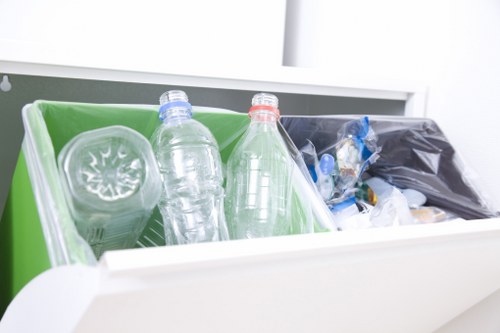 Our London Rubbish Collection team is committed to building a greener city through pragmatic recycling and sustainability practices. Working across inner and outer boroughs, the service supports borough-led waste separation rules — from separate food waste caddies in many central boroughs to dual-stream kerbside recycling in some suburbs. We combine operational excellence with community partnerships to increase reuse and cut landfill. Target-driven action underpins everything we do.
We set a clear recycling percentage target: 65% recycling rate by 2030 across all collections we manage in London. That ambition aligns with borough-level goals and the wider metropolitan strategy to reduce residual waste. To reach this, Rubbish Collection London invests in public communications, easier route-based sorting, and expanded separate collections for food, glass and textiles. Meeting this target means fewer emissions, more material reuse, and stronger local circular economies.
 A cornerstone of our approach is efficient logistics. Our low-carbon fleet and route optimisation reduce CO2 per tonne collected, while local transfer stations minimise vehicle miles and double handling. In neighbourhoods from Enfield to Croydon and Newham to Wandsworth, we coordinate with council transfer depots and private transfer facilities to route materials directly to appropriate processing centres — including glass processors, organics anaerobic digestion sites, and high-quality recycling facilities.
Local Transfer Stations and Material Flows
We collaborate closely with transfer stations around the capital to ensure materials are processed correctly and speedily. Our partnerships with borough transfer points help create clear material flows for mixed recycling, separate food waste, garden waste and residual waste. Reducing handling time at transfer points keeps contamination down and increases the yield of recyclable material.Key operational measures include:
- Segregated loading at transfer hubs to keep organics and recyclables distinct.
- Direct delivery routes to specialist processors for glass, paper, plastics and textiles.
- On-site inspections to advise boroughs on contamination reduction.
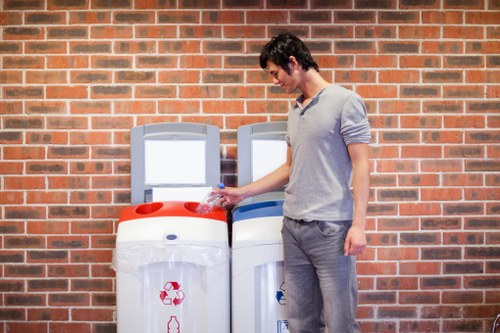 We work with transfer facilities to prioritise local processing where possible, cutting transport emissions. That means shorter trips for our low-emission vans and quicker turnaround for reusable items destined for charity partners or refurbishment centres.
Partnerships with Charities and Reuse Networks
Rubbish Collection London has developed strong relationships with a range of charities and social enterprises to extend the life of goods and materials. Rather than treating reusable items as waste, we divert functional furniture, working appliances and textiles to community organisations. Our charity partners include local reuse charities, food redistribution groups like FareShare, and social enterprises that run repair cafes and upcycling workshops. These collaborations create social value and reduce the need for new production.Examples of partnership activity include:
- Direct handover of reusable furniture to community reuse centres.
- Food surplus redistribution to neighbourhood food banks and community kitchens.
- Textile collection drives feeding accredited clothing banks and social enterprises.
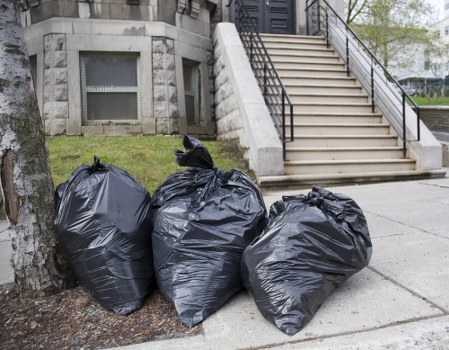 To support borough-level waste separation schemes, we provide tailored collection solutions. In boroughs with separate food waste collection, our crews ensure food caddies are transferred promptly to AD plants; where glass is collected separately, we maintain dedicated glass compartments on vehicles. These approaches complement each borough's recycling policies and make kerbside separation more effective.
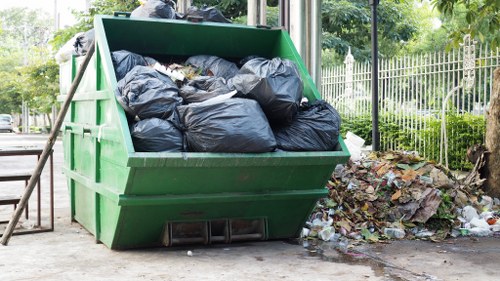 Sustainability also means cutting transport emissions. Our fleet transition includes hybrid and fully electric low-carbon vans for last-mile collections, plus training for drivers in low-emission driving techniques. By combining electric vehicles, telematics-based route planning and consolidation at transfer stations, our operations reduce fuel consumption and local air pollution while maintaining reliable London waste collection services.
We track performance rigorously: tonnes collected, contamination rates, re-use volumes and vehicle emissions are monitored monthly. That data feeds continuous improvement programmes — from community education on what goes in which bin to targeted swaps of vehicles and equipment that further lower carbon intensity.
Looking ahead, London rubbish collection services must evolve with the city. Our plan balances ambitious recycling percentage targets, collaboration with boroughs and charities, and investment in low-carbon fleets and smarter transfer station logistics. By doing so, London Rubbish Collection (and related waste services across the capital) aims to support a fairer, cleaner and more circular London for everyone.